

How Is AI Changing Google Ads and the Customer Journey in 2026?
AI is changing Google Ads by allowing Google to understand longer, more conversational searches and connect advertisers with customers across Search, Shopping and YouTube. Advertisers now need stronger product data, tracking, content and creative, not simply the right keywords.
Welcome to the first AI driven peak season
Last year, 61% of shoppers used AI platforms or features during their Christmas shopping, and 64% said they wished they had used them more. This year, AI will play a much bigger role in how people discover products, compare their options and decide what to buy.
Google found that 94% of holiday shoppers who used AI considered it valuable during their shopping journey, while three in four users said Google AI Mode or AI Overviews helped them make faster and more confident decisions.
However, faster decisions do not necessarily mean shorter buying journeys. Shoppers who use AI interact with an average of 2.8 times more touchpoints than those who do not. They compare more products, assess more brands, watch videos, read reviews and look for evidence that they are making the right choice.
AI is not removing the research stage. It is removing much of the frustration involved in finding useful answers, which allows people to investigate more options before deciding what to buy.
What businesses need to understand
• Searches are becoming longer, more detailed and more conversational.
• AI makes it easier for shoppers to compare brands and validate their choices.
• The path to purchase now moves repeatedly between Search, Shopping, video, reviews and websites.
• A large part of the buying decision may be made before the shopper reaches your website.
• Google’s automation performs best when it has accurate data, useful content and strong creative to work with.
How AI is changing search behaviour
Google reports that searches made through AI Mode are, on average, three times longer than traditional searches. A shopper is no longer limited to typing a broad phrase such as ‘best running shoes’. They can explain exactly what they need:
Which women’s running shoes are best for someone training for their first half marathon, who runs mainly on roads, needs extra ankle support and has a budget of £120?
That question gives Google far more information about the shopper’s intentions, priorities and concerns. It also creates more opportunities for relevant businesses to appear. Success is no longer determined simply by whether an advertiser bids on a particular keyword. Google also needs to understand which products, content, videos and offers provide the most useful response.
Keywords still matter, but they now sit within a much richer set of signals. The quality of your website content, product information, creative assets, conversion tracking and customer data all influence what Google’s systems can understand and how effectively they can connect your business with potential buyers.
In the accounts I manage, this shift makes the quality of those inputs increasingly important. Google’s automation cannot compensate for incomplete product feeds, unreliable conversion tracking, weak landing pages or creative that gives shoppers no compelling reason to choose the business.
The modern buying journey does not stay in one channel
Businesses can no longer afford to manage Search, Shopping, Performance Max, Demand Gen and YouTube as though each one exists in isolation. The modern buying journey moves between all of them.
Someone might discover your product through a video, search for your brand, compare it with several alternatives, read reviews, watch a demonstration and then return through a Shopping ad to make a purchase.
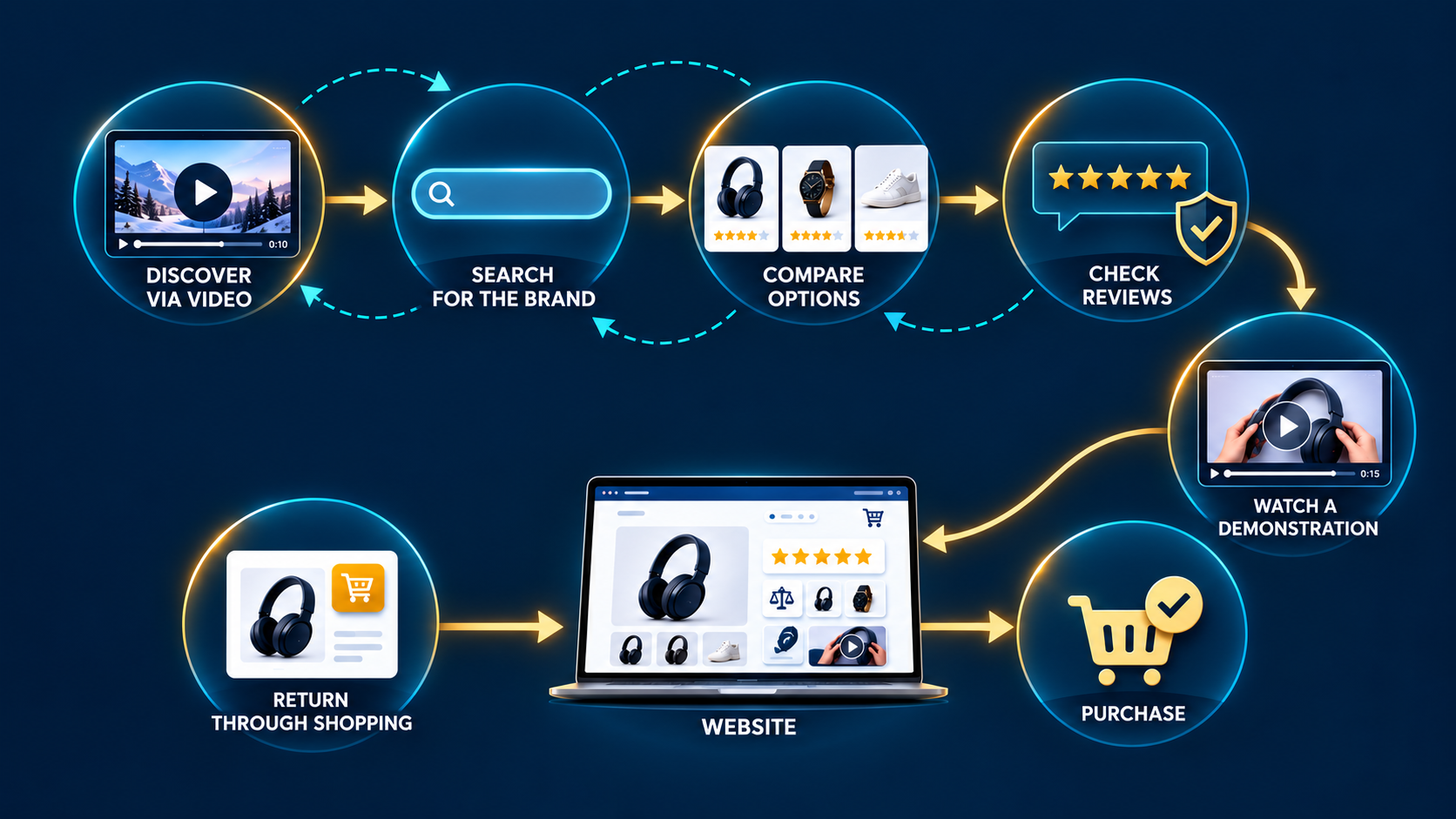
The modern customer journey moves between discovery, research, validation and purchase
By the time that person reaches your website, they may already have compared your product with your competitors, checked your reputation, watched somebody use it and decided whether they trust your business. Your website is no longer responsible for doing all the selling because a significant part of the decision may already have been made.
This also changes how campaign performance should be assessed. The final click can be important, but it rarely explains the whole journey. A YouTube video may create the initial interest, Search may help the shopper verify your business, and a Shopping ad may bring that person back when they are ready to buy.
What your advertising needs to provide
Advertising during peak season needs to do more than place a product in front of somebody and hope they click. Every part of the campaign should help Google understand the offer or help the shopper make a decision.
Accurate and detailed product data
Your product feed needs complete titles, descriptions, attributes, prices, availability and imagery. Thin or inaccurate information limits what Google can understand about the product and the searches for which it may be relevant. A new product feed also needs time to collect data and settle before peak demand arrives; uploading it at the last minute leaves very little opportunity to identify and correct problems.
Advertising that explains why people choose you
An advert should not simply repeat the product name. It should communicate the reasons someone might choose your business, including the quality of the product, delivery options, guarantees, service, expertise or any genuine point of difference.
Content that answers buying questions
Your website needs to answer the questions shoppers ask while comparing their options. Useful product pages, guides, FAQs and comparison content give customers the reassurance they need while also giving search systems clearer information about your expertise and offering.
Video that demonstrates and reassures
Video should not exist purely for broad brand awareness. Product demonstrations, explanations, reviews and practical examples help shoppers see what they are buying and decide whether it suits their needs. This is one reason YouTube has become so important within an AI assisted buying journey.
Why trust matters even more during peak season
Shoppers have more choice, but they are also increasingly careful about where they spend their money. AI can introduce somebody to a brand they have never encountered before, but that shopper will still want to validate what they have found.
Google’s research suggests that 81% of social media users turn to Google Search to investigate discoveries made on social platforms. Shoppers are also 2.3 times more likely to say they use Google Search for purchase decisions than ChatGPT.
People may use many different platforms for ideas and inspiration, but Google and YouTube still play a crucial role when those ideas need to become confident buying decisions. Search helps people investigate and verify a business, while YouTube lets them see products being used, reviewed, tested and explained.
Trust therefore needs to be visible throughout the journey. Reviews, prices, delivery information, availability and returns policies should be clear and consistent wherever somebody encounters your business. Any gap between the advert, product feed and website can create doubt at the point when the shopper is deciding whether to proceed.
Why preparation cannot wait until November
The businesses that perform well during peak season will not necessarily be those shouting the loudest or offering the biggest discount. They will be the ones giving Google the strongest information, appearing throughout the research journey and providing enough evidence for shoppers to make a confident decision.
That requires more than switching campaigns on in November. Google’s automated systems need time and reliable information to learn from. Product feeds need optimising, conversion tracking needs checking, audiences need building, creative needs testing, landing pages need improving and video content needs producing.
Existing campaigns and established feeds can respond comparatively quickly when the underlying account is healthy. New accounts, new feeds and major campaign changes need more time. The foundations should therefore be in place before demand reaches its highest point.
AI has not removed the fundamentals of effective marketing
AI is changing how people discover and choose businesses, but it has not removed the need to understand your customer. You still need to know what they want, what may prevent them from buying and what will give them enough confidence to choose you.
The difference is that Google can interpret those intentions in much greater depth and connect your business with relevant shoppers across Search and YouTube in ways that were not previously possible. It can only do that effectively when it has the right strategy, data, content and creative to work with.
How is AI changing Google Ads?
AI is changing Google Ads by helping Google understand the meaning and intent behind more detailed, conversational searches. It also influences bidding, targeting, ad creation and how campaigns connect shoppers across Search, Shopping, Performance Max, Demand Gen and YouTube. To use this automation effectively, advertisers need accurate conversion tracking, strong product data, useful website content and high-quality creative.
Are keywords still important in Google Ads?
Yes, keywords remain important because they help advertisers guide when and where Search ads should appear. However, Google now considers many additional signals, including the meaning of the search, landing-page content, previous user behaviour, location, device and the likelihood of conversion. Keywords are therefore part of the targeting strategy rather than the only factor determining whether an advert is shown.
How does AI affect the customer journey?
AI makes it easier for customers to research products, compare brands, check reviews, watch demonstrations and find answers to detailed questions. This can increase the number of touchpoints in the buying journey, even while making decisions feel faster and easier. By the time a shopper reaches a website, they may already have compared several options and formed an opinion about which business they trust.
When should businesses prepare Google Ads for peak season?
Businesses should begin preparing their Google Ads campaigns several weeks before peak demand begins. Existing, healthy campaigns and established product feeds can usually respond to changes relatively quickly, but new accounts, new product feeds and major campaign changes need considerably more time to collect data and stabilise. Tracking, feeds, budgets, landing pages, audiences and creative should all be checked and tested before the busiest period starts.
Prepare your Google and YouTube campaigns for peak season
If you want to know how to supercharge your business on Google and YouTube this peak season, I can review your current campaigns, tracking, product data and creative approach to identify where the strongest opportunities lie.
Meet the Author

Sandra Chapman
Google Ads Partner, Director
Sandra Chapman is a Google Ads specialist and Director of All Aspect Media Ltd. She has managed more than £23 million in advertising spend across the UK and international markets, helping businesses use Google Search, Shopping, Performance Max, Demand Gen and YouTube to generate profitable growth.
Learn more about Sandra and All Aspect Media
This article contains my own analysis and recommendations, informed by Google’s 2026 AI Powered Holiday Season Playbook and my experience managing Google Ads campaigns. The statistics referenced come from research commissioned by Google, including studies conducted by Ipsos. Sample groups and geographical coverage vary between findings.
If you want to know how to supercharge your business on Google and YouTube this peak season, I can review your current campaigns, tracking, product data and creative approach to identify where the strongest opportunities lie.
Recent Comments