
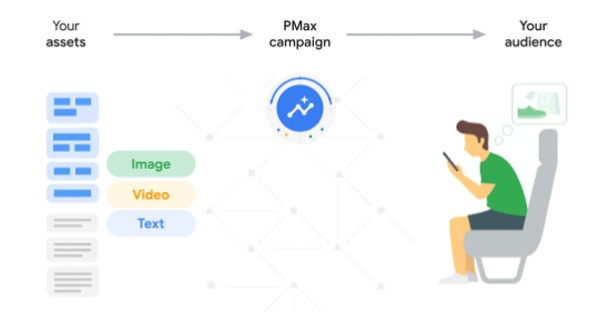
Optimising your Performance Max campaigns heavily relies on the quality of your creative assets. These components play a crucial role in setting your brand apart and enhancing your return on investment (ROI). Leveraging Google’s cutting-edge AI technology, Performance Max amalgamates your images, text, and videos into impactful asset groups to engage with your target audience across various platforms and channels.
Google Ads highlights the latest Performance Max features geared towards enhancing your advertising strategies for better outcomes. Drawing insights from collaborations with numerous merchants in Europe, we have outlined some fundamental best practices for managing creative assets:
Creative Assets Best Practice
Effective Creative Assets Can Bring In a 4x ROI*
*ThinkwithGoogle2023
Allocate Time :
When uploading assets, meticulous planning is essential. Allocate sufficient time before the launch date of your campaign to upload your assets. Define a clear start date and ensure all assets are approved and marked as “Enabled” beforehand, keeping in mind that this approval process may take several days, particularly for video assets.
For weekend promotions, initiate the campaign 2-3 weeks in advance. To transition from generic store assets to sales-oriented assets, regularly refresh your creative assets.
Variety Is Key:
Providing a wide array of assets is imperative. The more assets you incorporate into your campaign, the higher the number of auctions you can participate in, thereby increasing your chances of success.
Make sure to keep your visual content up to date by updating your images, videos, and text whenever you make changes to your marketing message, introduce new products, or run sales.
Instead of deleting underperforming assets, replace them with new ones to avoid limiting the number of ads served in your campaign.
Don’t worry if you’re low on images – use the image picker available in Performance Max campaigns or the asset library to find suitable visuals from your recent campaigns, website, or social media.
Optimize your image and video formats to ensure your message is clear on any platform.
Avoid using visuals with too much text, as it may become unreadable when resized.
For videos, make sure to position the most important elements in the optimal viewing area to guarantee visibility on any screen or channel.
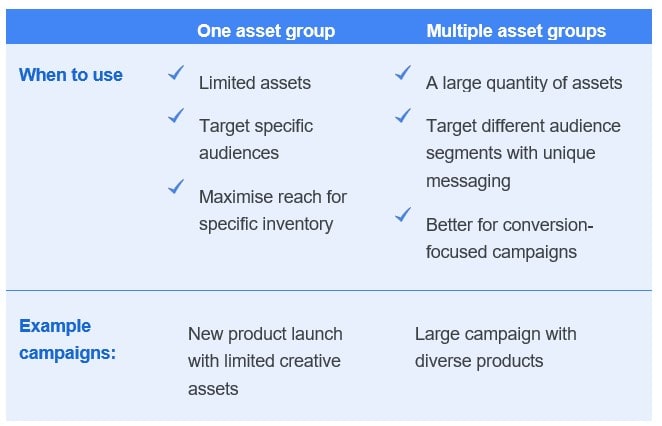
Asset Group Best Practice
Want to read more? You might be interested in these...

Recent Comments