

Are Ads Already Appearing In Gemini?
What’s Really Happening With Ads In Gemini
For months, Google has publicly maintained that its AI assistant, Google Gemini, is ad-free. No sponsored answers. No paid placements inside chat responses. No interruption to the conversational experience.
So when marketers recently began sharing screenshots showing what look very much like ads appearing alongside Gemini conversations, the reaction was predictable: confusion, concern, and a fair bit of “we knew this was coming”.
The reality, however, is more nuanced.
Ads are beginning to appear around Gemini-powered experiences, but not in the way many people assume. Understanding the distinction is important, especially for advertisers, PPC specialists, and businesses relying on Google traffic.
What’s Been Seen
The examples that brought this discussion back into focus were shared by Julie Brade, a member of the MeasureU team, after she noticed product-style ad units appearing alongside Gemini conversations in a free personal Google account.
The ads surfaced while she was researching college options for nursing courses in Texas. What made the sightings particularly notable was their inconsistency and behaviour.
Across multiple conversations:
-
The ads appeared sporadically rather than consistently
-
They surfaced in some chats but not others, even when the intent seemed similar
-
They appeared in a personal account, but could not be replicated in a Pro or work account
-
Clicking the listings revealed full UTM tracking parameters consistent with Google Shopping ads
-
In several cases, the ad content was poorly aligned with the topic being discussed, including recommendations unrelated to the colleges being researched
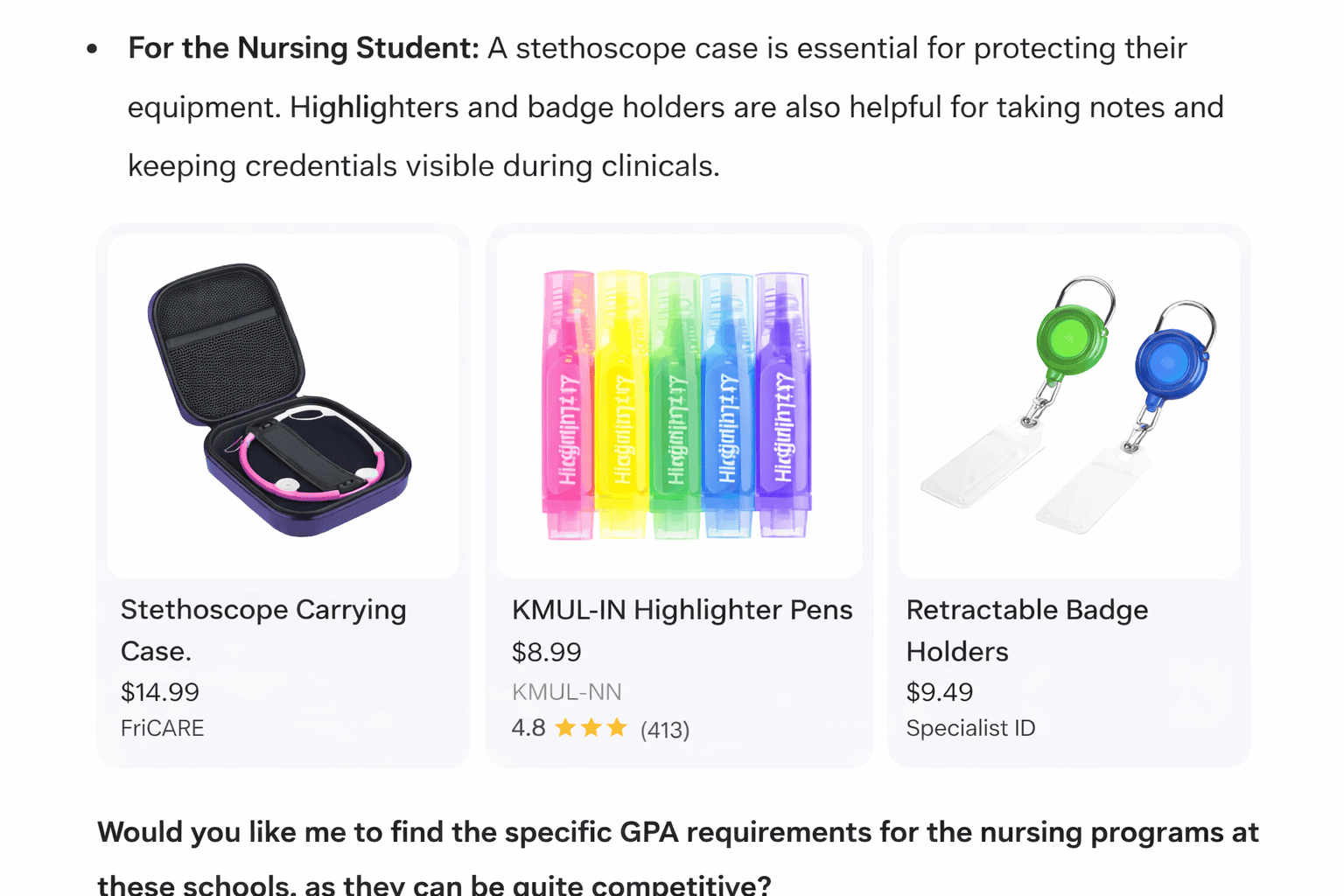
Source: Julie Brade, MeasureU community discussion, “We knew it was coming… Ads in Gemini”. Image reproduced with different product images and text
In at least one instance, hotel recommendations appeared despite accommodation never being mentioned in the conversation and locations bearing little relevance to the institutions being discussed. This added to the sense that these placements were being triggered by broader intent signals rather than the immediate conversational context.
The key distinction Google is making
To understand what’s happening, it helps to separate three things Google deliberately treats as different systems.
Gemini chat responses
Gemini’s conversational answers themselves remain unsponsored. Google has repeatedly stated that it is not inserting paid content into Gemini’s written replies, and there is currently no evidence that this has changed.
In other words, Gemini is not saying:
“Here’s the answer… and here’s a paid recommendation.”
That line has not yet been crossed.
Gemini-powered surfaces
This is where things get interesting.
Gemini increasingly powers experiences that sit around search, research, shopping, education and travel queries. These are not always labelled clearly as “Search” or “Ads” experiences, but they still exist inside Google’s commercial ecosystem.
In these environments, Google can (and now clearly does) introduce monetised modules alongside AI-driven interactions.
The ads being shown in the MeasureU examples behave exactly like Google Shopping ads:
-
Standard product cards
-
Merchant listings
-
Familiar slide-out panels
-
Typical CPC-based tracking parameters
-
No indication they originated from an AI interaction
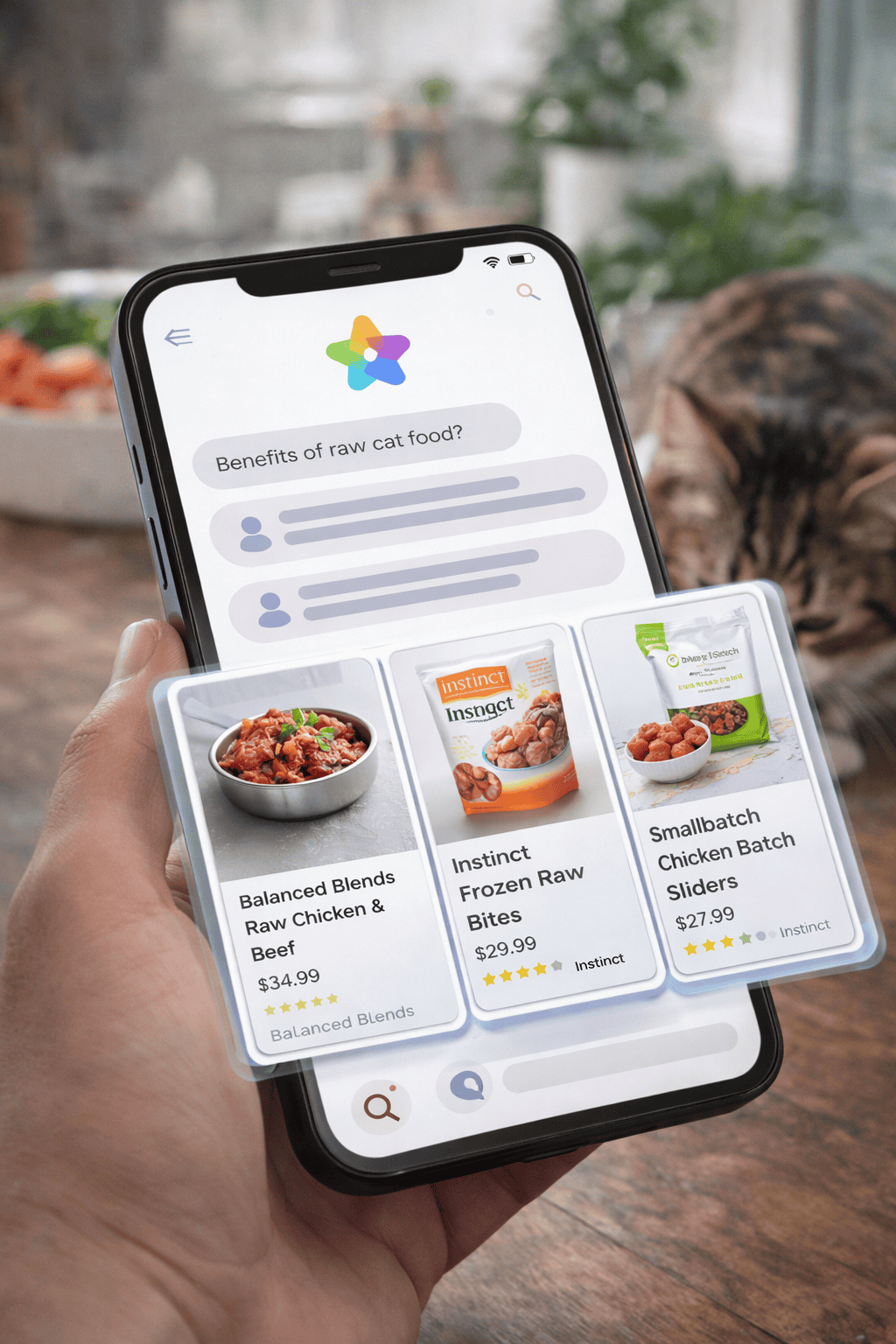
From an advertiser’s point of view, they look like any other Shopping placement.
And that’s the point.
Why this doesn’t technically contradict Google’s statements
When Google says “there are no ads in Gemini”, it is being very precise with language.
-
Gemini is not writing ads
-
Gemini is not inserting sponsored content into its answers
-
Gemini is not selling conversational placements (yet)
But Google is monetising Gemini-powered experiences by placing standard ad inventory alongside them.
This is why the screenshots feel surprising, yet still align with Google’s official position.
The biggest red flag: relevance
One of the most telling details in the MeasureU examples was poor contextual relevance.
Some hotel recommendations appeared despite:
-
No mention of hotels in the conversation
-
Locations far from the colleges being discussed
-
No clear logical connection to user intent
This strongly suggests early-stage testing, not a refined AI-driven ad model.
If Gemini itself were selecting or recommending ads conversationally, relevance would almost certainly be tighter. Instead, this looks like a traditional monetisation layer being attached to an AI-driven context signal.
Why account type matters
The fact that these ads appeared in a free personal account but not a Pro or work account is also consistent with how Google tests new monetisation models:
-
Consumer accounts are often used first
-
Paid or professional tiers are frequently excluded from early experiments
-
Rollouts vary by region, intent category, and user behaviour
Education-related queries are also a logical testing ground due to high advertiser competition and strong commercial intent.
What this means for advertisers and businesses
This shift has several important implications:
-
AI conversations may already be feeding Shopping and Search inventory
-
Attribution may become less transparent unless Google improves labelling
-
Advertisers may receive traffic influenced by AI without realising it
-
The line between search, discovery, and assistance is becoming increasingly blurred
In short, this is not the final model. It’s the beginning of one.
The honest answer to “Are there ads in Gemini?”
The most accurate answer right now is:
Gemini does not insert ads into its chat responses, but Google is already monetising Gemini-powered experiences by placing standard Google Ads units alongside AI-driven interactions.
That distinction matters, even if it doesn’t feel like it does to users.
Sources and attribution
This article is informed by:
-
Observations and screenshots shared by Julie Brade (MeasureU Team) in the MeasureU community post “We knew it was coming… Ads in Gemini”
-
Analysis of visible UTM parameters and ad behaviour consistent with Google Shopping ads
-
Google’s publicly stated position on Gemini and advertising
Recent Comments